Airspace and charts
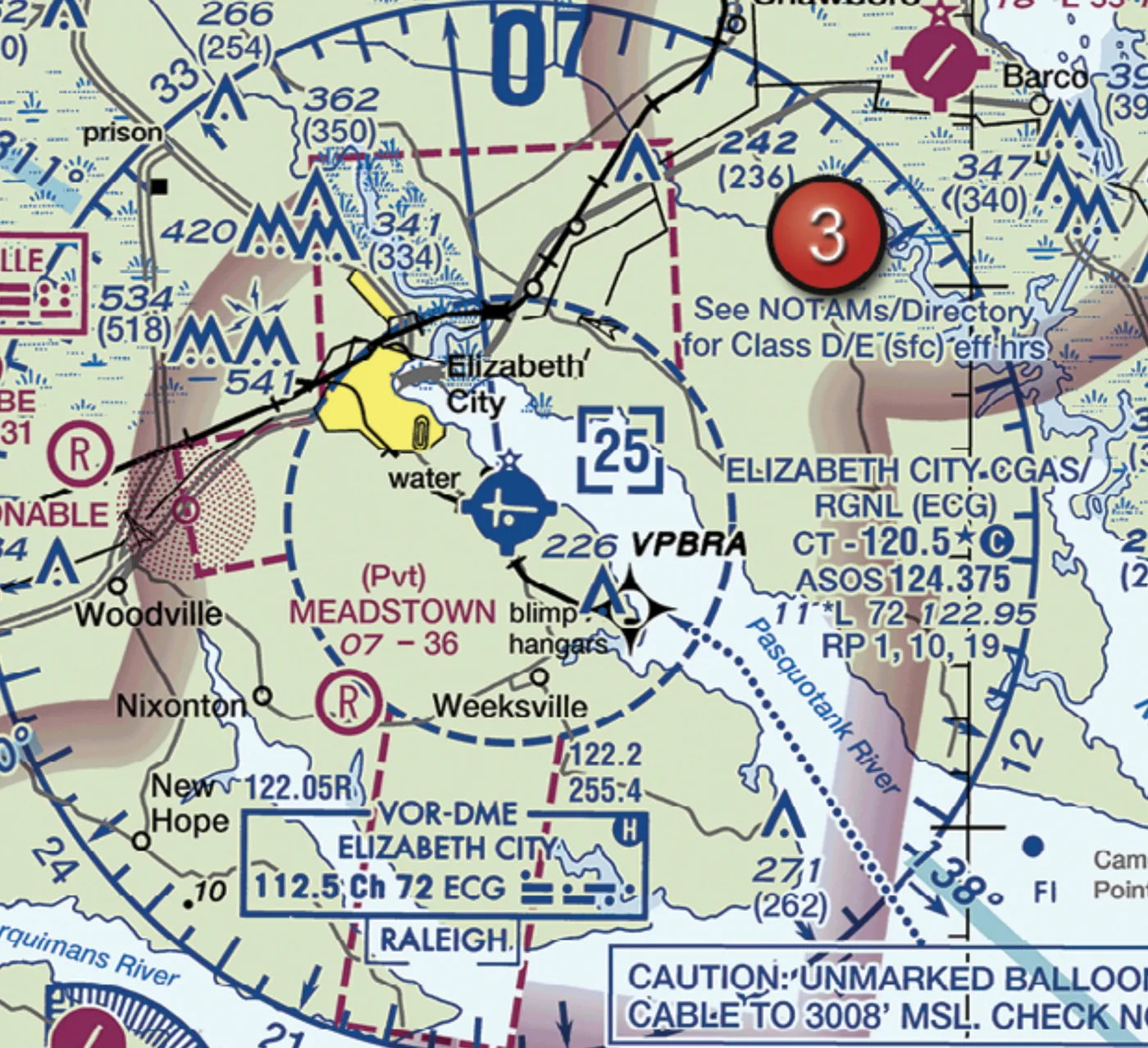
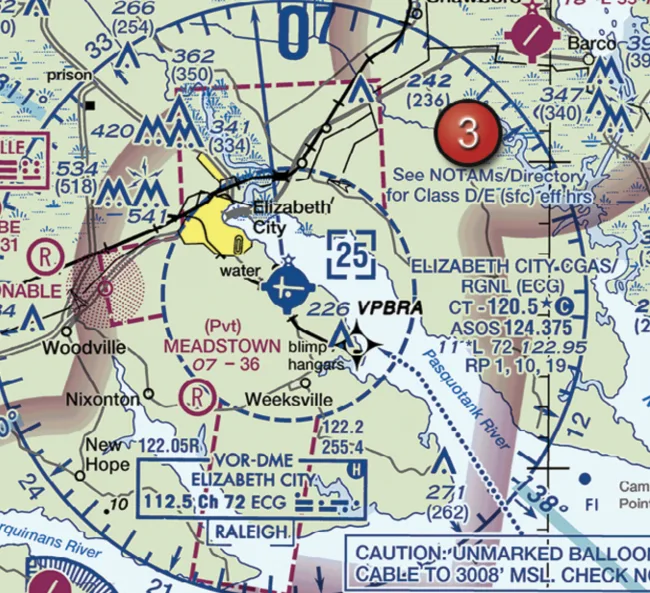
Read the Class D chart
Read the boundary, read the ceiling, then apply the authorization rule.
Prepare for the FAA Part 107 exam with visual lessons, 650+ practice questions with explanations and three timed practice tests.
72 hours free No credit card
Try 20 free practice questions · No account needed
Interactive 3D models and video explanations show what changes, one step at a time.
Answer questions by topic with an explanation after each one, then take timed mock exams.
60 guided lessons take you from the basics to exam practice, at your own pace.
Across regulations, airspace, weather, loading, operations and human factors.
Each with an explanation and its FAA source.
Answers save automatically. Results after submission.
Separate from the practice questions.
Guided lessons with interactive 3D models, chart exercises and video explanations. Each lesson ends with a question to check the concept.
Narrated videos show how a process develops, from a growing thunderstorm to the shape of airspace. Pause or replay a video whenever you need to.
Choose a topic, or review questions that are due. An explanation and the FAA source appear after each answer.
Timed exams in the format of the FAA knowledge test. Results and explanations appear after you submit.
Example lessons. Each one is built around a large visual: an FAA chart, a 3D model, a video or an image of the situation.
Read the boundary, read the ceiling, then apply the authorization rule.

Follow updrafts, downdrafts and surface outflow through each stage.
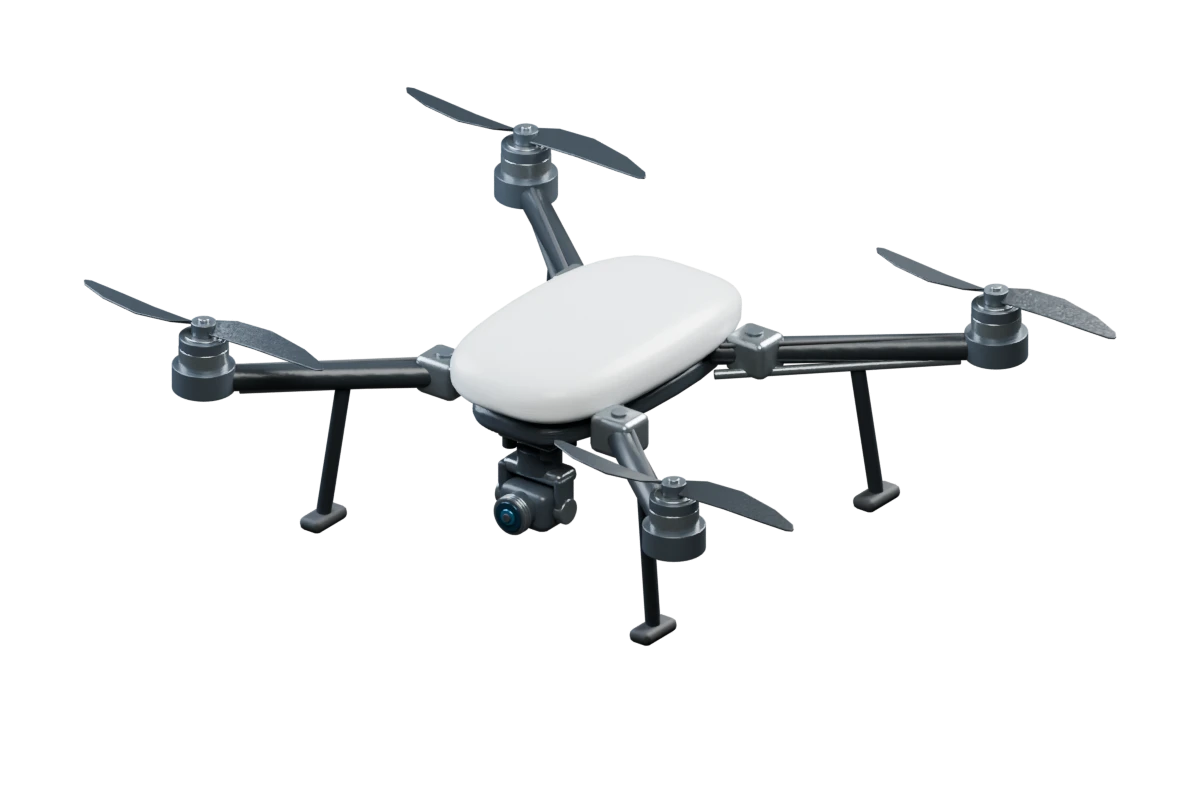
Move a payload and compare its effect on the centre of gravity.
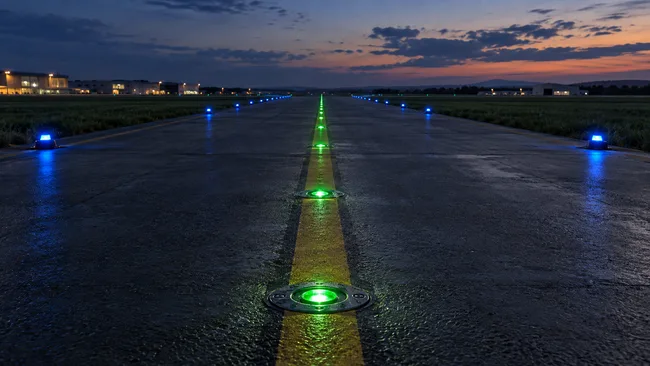
Identify runway and taxiway lights and what each colour means.
When a lesson or question leaves you unsure, ask a follow-up right there. Get help with the reasoning while the subject is still in front of you.
Included with course access. 50 questions per calendar month.
They start measuring from different places.
Above ground level (AGL) measures from the ground directly below you. Above mean sea level (MSL) uses a shared sea-level reference.
If the ground is 600 feet above mean sea level and the drone is 200 feet above that ground, its altitude is 800 feet above mean sea level.
The drone is still only 200 feet above the ground. FAA · Altitude definitions ↗
Lessons, practice, mock exams and an AI tutor included.
Plus applicable sales tax, calculated at checkout.
The official FAA knowledge test and its fee are separate.
One new lesson and ten questions each day, with lesson checks included separately. No credit card or automatic charge. Mock exams and the AI tutor require paid access.
Find out what is included and how to prepare for the official exam.
Our exam guide explains the test format, time allowance, passing score and subject areas, with links to the official information and booking guidance.
Read about the FAA Part 107 examThe exam tests the knowledge needed to plan and conduct small-drone operations safely. The main areas are regulations, airspace, weather, aircraft loading and performance, and flight operations.
Prepare across these areas rather than relying on a small set of memorised answers.
Read the full guideExpect multiple-choice questions with three answer options. Some test a fact or rule directly; others ask you to apply knowledge to a flight situation. Figure-based questions may require you to read a chart, identify airspace or interpret information from the testing supplement.
Practise both recalling the rule and working out what it means in the question. For chart questions, locate the correct figure and area before interpreting the symbols, heights or boundaries. The FAA’s published sample set illustrates these different styles; it is not the live exam question bank.
Read the full guideThe UAG applicant bulletin specifies 60 scored questions plus five unscored validation questions. You have 120 minutes. The passing score is 70%, which means 42 correct answers out of the 60 scored questions.
Our mocks use the same scored/unscored format. Review the reasoning after submitting, including answers you guessed correctly.
Read the exam format and scoring guideNo. The current blueprint allocates 48% to regulations, 20% to airspace, 5% to weather, 2% to loading and performance, and 25% to operations. The revised blueprint took effect on 29 September 2025.
Use it to organise revision while studying every area. The old percentage ranges in the Airman Certification Standards are not the current weighting.
Read the current topic breakdownThe Remote Pilot Certificate is the FAA qualification for flying under Part 107. First-time applicants must be at least 16 to obtain it, meet the English-language and safe-operation requirements, and pass the knowledge test.
You do not need previous aviation study to begin preparing. Existing Part 61 pilots who meet the FAA’s conditions have a different training route, so check which pathway applies to you before booking a test.
Read the full guideCreate an IACRA profile to obtain your FAA Tracking Number, then arrange the UAG test through the FAA-linked testing provider. Check the appointment, identification requirements and current fee before booking.
The official exam is separate from Airspace School. Course plans start at $9.99 USD per month, or $39.99 USD once for 12 months. Neither plan pays for your testing-centre appointment or a retake.
Read the full guideThe FAA reported an 82.96% UAG pass rate across 73,914 tests in 2025. That measures national test outcomes, not the minimum passing score and not results from Airspace School learners.
We do not currently publish our own pass-rate percentage because we do not yet have verified exam-outcome data.
See the source data and earlier yearsThe FAA says you may retake the knowledge test after 14 days. Use the topic codes on your result report to identify the areas that need attention, rather than immediately repeating the same mock paper.
Return to the explanation, work through fresh topic questions and check why the other answers are wrong. Once you can apply the idea to different examples, try another timed mock. Check the testing provider’s current booking and payment arrangements for the new appointment.
Read the full guidePassing the knowledge test is followed by a certificate application through IACRA and the required security screening. Follow the FAA’s instructions for receiving your temporary and permanent certificates.
There is also a continuing knowledge requirement: Part 107 pilots need the appropriate recurrent training within the previous 24 calendar months. The FAA provides that training online. Course access and the FAA’s certification requirements are separate.
Read the full guideCreate and verify your account. Your 72 hours start when you first open a lesson or questions. Each 24-hour period includes one new lesson and ten questions shared across Practice and Question Bank. Lesson checks are separate, and you can revisit opened material during the trial. Mock exams and the AI tutor require paid access. Your progress is saved if you buy a plan. There is no automatic charge.
There are more than 650 questions in the shared Practice and Question Bank pool, plus 195 separate questions across three mock exams and 65 lesson-check questions: more than 900 in total. Practice and Question Bank are two ways to use the same pool, so we count those questions once.
See what is included in the courseYour access brings together three ways to prepare. Learn explains the concepts with interactive 3D models, videos, images and short teaching steps. Practice uses the question bank to help you work through individual topics. Mocks let you attempt a timed paper and review your answers afterwards.
Use them together: learn an unfamiliar subject, practise applying it, then use a mock to find what still needs work. Plans start at $9.99 USD per month. You can also pay $39.99 USD once for 12 months with no automatic renewal.
Read the full guideThe course is organised around Part 107 subject areas, including rules and pilot responsibilities, airspace and charts, weather, loading and aircraft performance, and safe flight operations. Within a lesson, the explanation and visual focus on one idea at a time.
For example, the balance lesson lets you move a case and see the balance point change. The thunderstorm lesson combines a video with a model of the stages. These examples show the teaching format; the course list lets you inspect the wider range of lessons.
Read the full guideEach format does a different job. A 3D model lets you change something and inspect the result from another angle. A video shows a process unfolding over time. Images and figures let you study a particular feature, diagram or chart at your own pace.
The accompanying explanation tells you what to look for and why it matters. You then apply the idea in a question. Try the free balance lesson below to see the model, teaching sequence and checks in the course itself.
Read the full guidePractice is for working on a particular topic using the question bank. Read the feedback, understand the answer and return to the lesson if the underlying idea is still unclear. It is useful when you know what you want to improve.
A mock is a timed attempt across a mixture of topics. Use it to practise working through a whole paper, then review the answers and decide what to revisit. A strong result is useful feedback, but no practice score can guarantee your official exam result.
Read the full guideNo. Our study questions are preparation material, not access to the FAA’s active exam bank. They are intended to help you understand and apply the subject matter, including reading figures and choosing between plausible answers.
Learning the reason behind an answer matters more than remembering its position on the screen. On the official test, the wording, numbers or situation may differ. Use Practice to identify the knowledge being tested, and Mocks to practise applying it under time pressure.
Read the full guideYou can start with the guided lessons and work at your own pace. The aim is to introduce the idea, explain the necessary aviation terms and show how to use the information before asking you to apply it.
Try a full lesson before buying. In the balance lesson, move the case, watch the aircraft respond and work through the following steps. That gives you a better feel for the course than a screenshot or a list of features.
Read the full guidePlans start at $9.99 USD per month. This option renews monthly until cancelled. Cancel renewal in your Account; access continues until the end of the period you have paid for. Or pay $39.99 USD once for 12 months with no automatic renewal.
Both options include Learn, Practice, Question Bank, Mocks and the AI tutor. The official FAA exam appointment and any retake fees are separate.
Read the full guideCompare the way you will actually study, as well as the price. Open a lesson, try a sample question and look at the feedback. Check the length of access, available support, mock exams and the terms of any advertised guarantee.
Airspace School plans start at $9.99 USD per month, or $39.99 USD once for 12 months. Both combine interactive 3D lessons, videos and images with Practice and Mocks. Other providers may offer longer access or additional support. The useful question is which combination suits the way you learn and the help you want.
Read the full guideAirspace School starts at $9.99 USD per month, or $39.99 USD once for 12 months, with interactive visual lessons, Practice and Mocks. Pilot Institute advertises video instruction, quizzes, practice exams and lifetime course access.
Try both teaching formats and compare their current support and guarantee terms. Longer access may matter if you want a reference resource for years; interactive models may matter if you want to experiment with a concept as you learn it. Visit Pilot Institute’s page for its current price and full offer.
Read the full guideAirspace School offers access from $9.99 USD per month, or $39.99 USD once for 12 months. Drone Pilot Ground School advertises lifetime access and support through calls, email and live webinars, alongside its course material.
That makes access duration and the kind of support you want useful points of comparison. Its pricing page can show promotional as well as standard offers, so check the current individual price and the terms of any guarantee directly. Do not assume that similarly named packages include the same services.
Read the full guideYes. The FAA provides standards, study resources and sample-question materials. A paid preparation course is optional; it is not a condition of applying for a Remote Pilot Certificate.
Self-study means organising the topics and finding explanations for anything you do not understand. A course adds a teaching sequence and a place to practise. Start by looking at the official resources, then try our lesson and decide whether that structure is useful to you.
Read the full guide
Try Part 107 free for 72 hours, with one lesson and ten questions each day. No credit card or automatic charge. Mock exams and the AI tutor require paid access. Full access is $9.99 USD per month or $39.99 USD for 12 months.